Her God Was "Like a Tiger"
Dorothy Sayers rediscovered the gripping drama of Christian doctrine.

We live once again, as did early 20th-century mystery writer and lay theologian Dorothy L. Sayers, in a world that could care less about the doctrines of the Christian church. And once again, many of those who care least are self-identified Christians and faithful churchgoers.

Before we lose all grip on the intellectual content of our faith, it’s time to reacquaint ourselves with Sayers. In a recent Glimpses bulletin insert, I sketched her twin passions for swashbuckling drama and intellectual order, and suggested how these suited her to the great task of modern apologetics—a task probably still as urgent for Christian as for non-Christian audiences:
Dorothy L. Sayers (1893–1957) was a prolific scholar, novelist, essayist, playwright and translator. Those who know about her today have usually met her through her detective stories and their memorable hero, Lord Peter Wimsey. But there is much more to her story. In a time of spiritual confusion, she emerged, almost despite herself, as an unlikely voice of clarity and a compelling lay “preacher” of the gospel.
Sayers, a clergyman’s daughter, was born into a late-Victorian Oxford, England that had ceased to be a sleepy medieval town: automobile factories now encroached on its narrow streets and dreamlike spires. Worse, the Christian tradition that had birthed Oxford University was now in full retreat throughout Europe. Anyone truly “modern” believed that humans, like everything else, are just aggregations of atoms, and matters of morality and spirit thus mere illusions.
Even the Church of England was giving in, so that by the turn of the century, bishops who doubted Christ’s resurrection were called “courageous.” And though many ministers and laypeople still held on to Christian faith, it was increasingly a sentimentalized, moralistic version.
In late girlhood and adolescence, Sayers was bright enough to observe and dislike the stuffed-shirt piety of the modernizing Church of England. She remarked that, like sex, such mysteries of the faith as the sacraments and God himself seemed to be considered “exceedingly sacred and beautiful,” yet also “indelicate, and only to be mentioned in whispers.” As she would later say about this sort of overdone churchiness: “At the name of Jesus, every voice goes plummy.”
Forgotten 'Father of Biblical Science'
Moses Stuart pioneered modern biblical study in America.

After returning from the most recent meeting of the Society of Biblical Literature, noted New Testament scholar Dan Wallace of Dallas Theological Seminary raised a longstanding concern. Qualified graduates of evangelical seminaries find it difficult to gain admission to prestigious biblical studies programs in the United States. The critical assumptions of the modern academy prohibit many evangelicals who regard the Bible as authoritative from being accepted by the scholarly guild.
This problem is certainly now new. But more than 500 comments on Wallace’s blog indicate that it still elicits strong reactions. Since the early 20th century, evangelicals have been treated as outcasts by some of the very schools their forebears founded. This reversal has obscured the historic role of evangelicals in bringing America up to date with German and British advances in biblical scholarship. Andover Seminary’s Moses Stuart in particular earned the title “Father of Biblical Science in America” for his distinguished career teaching generations of pastors and scholars at America’s first seminary.
J. I. Packer, Man of God's Word
Contributors to new book highlight theologian's belief in inerrant Scripture.

History lovers have to appreciate a book that charts the evangelical future by looking back on the life and legacy of a great theologian. Of course, such a strategy of turning back to find your way forward perfectly suits J. I. Packer. As an accomplished historian and theologian, Packer finds cures for what ails contemporary evangelicalism by exploring the contributions of spiritual giants such as the Puritans. So we expect nothing less than prescriptive retrospective from J. I. Packer and the Evangelical Future: The Impact of His Life and Thought, a new book edited by Timothy George.
The book mostly compiles essays from a 2006 conference hosted by Beeson Divinity School. Presenters included Charles Colson, Mark Dever, Alister McGrath, Carl Trueman, and the CH blog's own David Neff. Not surprisingly, several of the essays touch on Packer's contributions to the doctrine of Scripture.
“This insistence on the Bible as the irreplaceable source for all adult catechesis in academic and church settings is arguably Packer’s most important legacy to the future of evangelicalism," writes Paul House, Beeson's associate dean. "Without this emphasis Packer’s catechesis makes little sense and will have little continuing impact, and the same is also true for evangelicalism.”
In particular, Packer has contended for more than 50 years that evangelicals should hold to the belief that Scripture is infallible and inerrant. Denver Seminary associate dean Donald Payne writes, “It is difficult to overstate the importance of biblical inerrancy in Packer’s theological method. According to this logic, obedient discipleship is possible only if Scripture functions inerrantly.”
How to Beat the Cold Weather
Sit down by the fire with some ripping historical yarns.
One of the reasons it took me five years to write Patron Saints for Postmoderns is the sheer volume of reading necessary to get a handle on the lives of ten complex people. It was worth it—and not just for the book: I discovered some bibliographic treasures along the way.
So, if you’re looking for some excellent historical reads, have I got a line-up for you!
John Comenius: The Labyrinth of the World and
The Paradise of the Heart (Classics of Western Spirituality)

John Comenius: The Labyrinth of the World and The Paradise of the Heart (Classics of Western Spirituality) by Howard Louthan, Andrea Sterk
This edition of Comenius's fascinating allegory has a simply wonderful introduction--one of the best I've seen for any historical book. It provides excellent biographical data and demonstrates real insight into Comenius's life, personality, and work.
'We Lepers'
As the Roman Catholic Church recognizes Hawaii's hero as a saint, what should we think about his chief posthumous critic?
It has been a good year for my old home state of Hawaii: it started the year with one of its own becoming President, and on October 11 one of its most famous heroes will officially become a saint of the Roman Catholic Church.

Even among Hawaii’s most Protestant Protestants, Damien de Veuster is praised as a man who exemplified incarnational, sacrificial ministry. The Belgian priest did not first go to the islands to minister to the Hansen's disease victims of the Kalaupapa colony on Molokai, but in 1873 he eagerly volunteered to minister.
“My Lord, remembering that I was placed under the pall on the day of my religious profession, thereby to learn voluntary death is the beginning of new life,” he told his bishop, “here I am, ready to bury myself alive among these unfortunate people, several of whom are personally known to me.”
Damien was not he first to volunteer to help the settlement (whose residents were not there voluntarily: isolation of those who had contracted Hansen’s disease was enforced by law from 1866 to 1969). But he seems to have been the first to work with the assumption that he too would contract the illness. Where other workers had left medicine, supplies, and food at a distance for the patients to use, Damien’s work almost ensured infection. “The manual labor of the roughest kind which he did for the lepers, to make them more comfortable, could not fail to produce frequently cuts, punctures and abrasions, by which the danger of inoculation was greatly increased,” a 1904 item in the Journal of the American Medical Association explained.
“You know my disposition,” Damien wrote two days after arriving in Kalaupapa. “I want to sacrifice myself for the poor lepers. The harvest is ripe.”
A bit more than a decade after his arrival, Damien discovered an early sign of infection: he had blistered his feet in a scalding footbath, but did not feel any pain.
“From henceforth I am forbidden to come to Honolulu again, because I am attacked by leprosy,” he wrote his bishop. “Its marks are seen on my left cheek and ear, and my eyebrows begin to fall. I shall soon be completely disfigured. I have no doubt whatever of the nature of my illness, but. I am calm and resigned and very happy in the midst of my people. The good God knows what is best for my sanctification. I daily repeat from my heart, Thy will be done.”
From some of his earliest days in the community, Damien had identified directly with his parishioners and patients. “I make myself a leper with the lepers, to gain all to Jesus Christ. That is why, in preaching, I say we lepers, not my brethren, as in Europe.” He continued to serve among them as one of them until his death on April 15, 1889.
Damien’s life, ministry, and death are certainly inspiring. But as his canonization draws nearer, I’ve been thinking more about the role criticism has played in both his life and in his fame. Nearly every biographical sketch talks about some kind of between Damien and other religious leaders. Honestly, much of this seems to be mere boilerplate for modern depictions of heroic Christians--they must always be in conflict with other religious leaders. Still, the depictions are not wholly unwarranted. Damien apparently exasperated some church leaders and government workers with his repeated requests for help. And when word of his work began to be publicized (largely due to the publication of one of his letters in Belgium) and supporters began sending him money, some Catholic officials reportedly worried that he was becoming prideful.
Billy Graham and the Rest of the Los Angeles Story
Famed evangelist had help with the revival that almost wasn't.

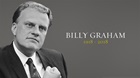
Sixty years ago this summer, Billy Graham reached a decision that changed the course of evangelical events. Shaken by his friend Charles Templeton’s growing skepticism of biblical authority, Graham wondered whether he could continue to preach. The doubts grew so strong that he even considered going back to North Carolina to work as a dairy farmer. With evangelistic meetings being planned for Los Angeles that fall, Graham needed a quick resolution one way or another. He conferred with Henrietta Mears, who founded the Forest Home Christian conference center where he was speaking. He confessed his concerns to God and wrestled for an answer. Fortunately for evangelicals, Graham resolved to accept God’s Word by faith. “I’m going to allow faith to go beyond my intellectual questions and doubts,” Graham prayed, “and I will believe this to be Your inspired Word.”
And the rest, as they say, is history. During his first sermon under the tent in Los Angeles, Graham thundered, “God Almighty is going to bring judgment upon this city unless people repent and believe—unless God sends an old-fashioned, heaven-sent, Holy Ghost revival.” He punctuated the end of every description of what ailed America with the refrain, “We need revival!” God heard his pleas. Aided by favorable media coverage of Hollywood conversions, Graham’s tent meetings lasted eight weeks, attracting hundreds of thousands. And the lanky Southern farm boy with the fiery delivery became a national celebrity.
This part of the story is familiar to many evangelicals. But they might not be aware of the people and events that preceded this well-known demonstration of the mid-century revival.
Continue reading "Billy Graham and the Rest of the Los Angeles Story" »
Even at 500, Calvin Inspires Today's Reformers
Historian Charles Hambrick-Stowe appeals to Calvin for UCC reform.

The deluge of tribute articles reminds us that John Calvin's 500th birthday is right around the corner. This week, Christians around the world will observe July 10, 1509, as a turning point in world history. The man who ridiculed relics and requested no tribute in death might shudder at the notoriety. But he would certainly appreciate learning how his voluminous writings have circulated the globe and equipped generations of gospel ministers.
Calvin might also like to know that his life's work still beckons church leaders today to call for reform. Historian and pastor Charles Hambrick-Stowe appealed to his legacy to encourage reform-minded mainline ministers during the UCC General Synod on June 28. A scholar with impressive breadth of expertise, Hambrick-Stowe now shepherds the flock as senior pastor of First Congregational Church in Ridgefield, Connecticut. Speaking for the Faithful and Welcoming luncheon, Hambrick-Stowe reviewed the heart of Calvin's theological vision for ministry and recapped what Congregationalists have lost by neglecting this key component of their heritage.

Continue reading "Even at 500, Calvin Inspires Today's Reformers" »
Ecumenism, education, culture-engagement and the "slippery slope" argument
The vision of John Comenius and the story of the Unity of the Brethren give us a good way to test a hypothesis.

History is a great place to go to test "slippery slope" arguments ? claims that "Questionable Belief or Practice A" will inevitably lead us to "Horrifying Situation B." One way to answer the argument is to appeal to precedent: "Let's look back and see whether things like 'A' have led to situations like 'B' in the past."
These days evangelicals with a heart for (1) ecumenical dialogue, (2) liberal education, and (3) cultural engagement are being told by fundamentalist watchdogs that they are leading good, faithful, Bible-believing people straight down the road to "liberalism."
Let's put this to a historical test.
Our focus: a small, persecuted, pietistic sect to which "father of modern education" and Protestant bishop John Comenius belonged in the 1600s.
Continue reading "Ecumenism, education, culture-engagement and the "slippery slope" argument" »
A Libertarian’s Lincoln
A political scientist finds much to admire about the sixteenth president—but scant connections between him and our current leader.

We had a guest in my "U.S. History since 1865" classes last week, Thomas Krannawitter from Hillsdale College in Michigan. Krannawitter was in town to lecture on his latest book, Vindicating Lincoln, and address my colleague's political science classes. It fit his schedule to visit my history classes, too. Even though the syllabus indicated that we were heading into the 1960s instead of the 1860s, my guest had no difficulty bridging the chronological gap with an analysis of changing perspectives on the Constitution and what came to be called civil rights.
Before proceeding, let me be clear that I do not know whether Krannawitter would call himself a libertarian. I did not ask him, nor do I know nearly enough about political philosophies to understand who might be flattered or horrified by association with the term. Wikipedia defines at least 10 strains of libertarianism, one of which includes small-government constitutionalists, and that's at least his ballpark. I should also admit that I have not read Vindicating Lincoln, so my comments refer to a guest lecture rather than to any published work. (It seems I'm on a roll with admitting things here. I don't enjoy Tolkien. There. I said it.)
To create a conversation using data points from my History 102 course, I asked Krannawitter, "How did civil rights legislation of the 1950s and ?60s continue or deviate from the Reconstruction Amendments we studied back in January?"
Marsden Discusses "Short Life of Jonathan Edwards"
Noted historian George Marsden's 2003 Jonathan Edwards: A Life won numerous awards, including the prestigious Bancroft Prize from Columbia University. Last year he published a shorter biography of Edwards aimed at a wider audience. We discussed the book and Edwards's legacy.
You describe revivalism as America's "most influential religious tradition." How do you reach that conclusion?
The United States is often noted for its continuing religious vitality in contrast with Western Europe and Great Britain. One reason for that has been that American Christianity has from early times been more voluntary than coerced by the state. Revivalism was one of the first adaptations to that voluntary environment and has been a major reason for church growth in every era ever since.
How did Edwards help craft that legacy?
In 1734 and 1735, as a young pastor, Edwards oversaw an amazing awakening in his town of Northampton, Massachusetts. That was not the first such awakening, but Edwards was the first to publicize it widely. He wrote a careful account of this "Surprising Work of God" and it was published in England. It was, for instance, an influence on John Wesley.
Continue reading "Marsden Discusses "Short Life of Jonathan Edwards"" »
"How Great Thou Art" & the 100-Year-Old Bass
The story of George Beverly Shea's signature tune.
George Beverly Shea turns 100 on Sunday, February 1. Ever since 1944, when 26-year-old Wheaton College student Billy Graham
recruited him to sing on the radio program "Songs in the Night," Bev Shea has been the face and the voice most associated in the public mind with the famous evangelist.
The song most associated with Billy Graham is "Just As I Am," but Bev Shea's signature tune is clearly "How Great Thou Art." Even though nearly every gospel artist - from Elvis Presley to the Mormon Tabernacle Choir - has recorded it, it is Bev Shea's tune. Here's the story of that song.
George Beverly Shea's first contact with "How Great Thou Art" dates to 1954. But the song itself dates to 1885, when Swedish pastor Carl Gustav Boberg was caught in a thunderstorm.
Continue reading ""How Great Thou Art" & the 100-Year-Old Bass" »
Back for the Future in Calvin's Geneva
I can't imagine Calvin would be pleased to know that in 2009 Europeans remember him the way Americans remember Samuel Adams--as a brand of beer.

We hadn't even planned to visit Geneva on our 2008 spring break tour of Germany, Switzerland, and Italy. With little more than a week to visit several sites, we didn't want to aggravate our friend, who was gracious enough to drive us around Europe.
But after visiting another friend in Lausanne, we couldn't resist driv-
ing to the southwest corner of Lac L?man (Lake Geneva).
I hadn't expected to miss much in Geneva. Sure, the city boasts gorgeous views of the Alpine lake, but we could see similar views from Lausanne. Traveling on a tight budget, we knew we couldn't afford to stay in Geneva, renowned today for its robust banking industry. I wasn't drawn to visit the international headquarters for the Red Cross or learn about the League of Nations, hosted by Geneva from 1919 to its demise in 1946. What I wanted to see were sites devoted to the legacy of reformer John Calvin, who moved to Geneva in 1536. But the travel books told me not to expect much more than la chaise de Calvin. The International Monument of the Reformation looked neat, but overall it appeared that Calvin's stature had deteriorated significantly since 1909, Calvin's 400th birthday and the year construction on the monument began.